
The mirror that does not flatter
It generalised from one example. It quoted a note instead of opening the file it pointed at. It called a check green when it had run nothing. It argued for three messages about a file it had not read. The someone was an AI agent, and the behaviours we file under «AI failure» turn out to be the oldest habits in any working life — only here they leave a trace anyone can re-run. Which leads somewhere less comfortable than a debate about machines: the standard you set for an agent is the standard you actually believe, said out loud, in a place where it gets enforced.
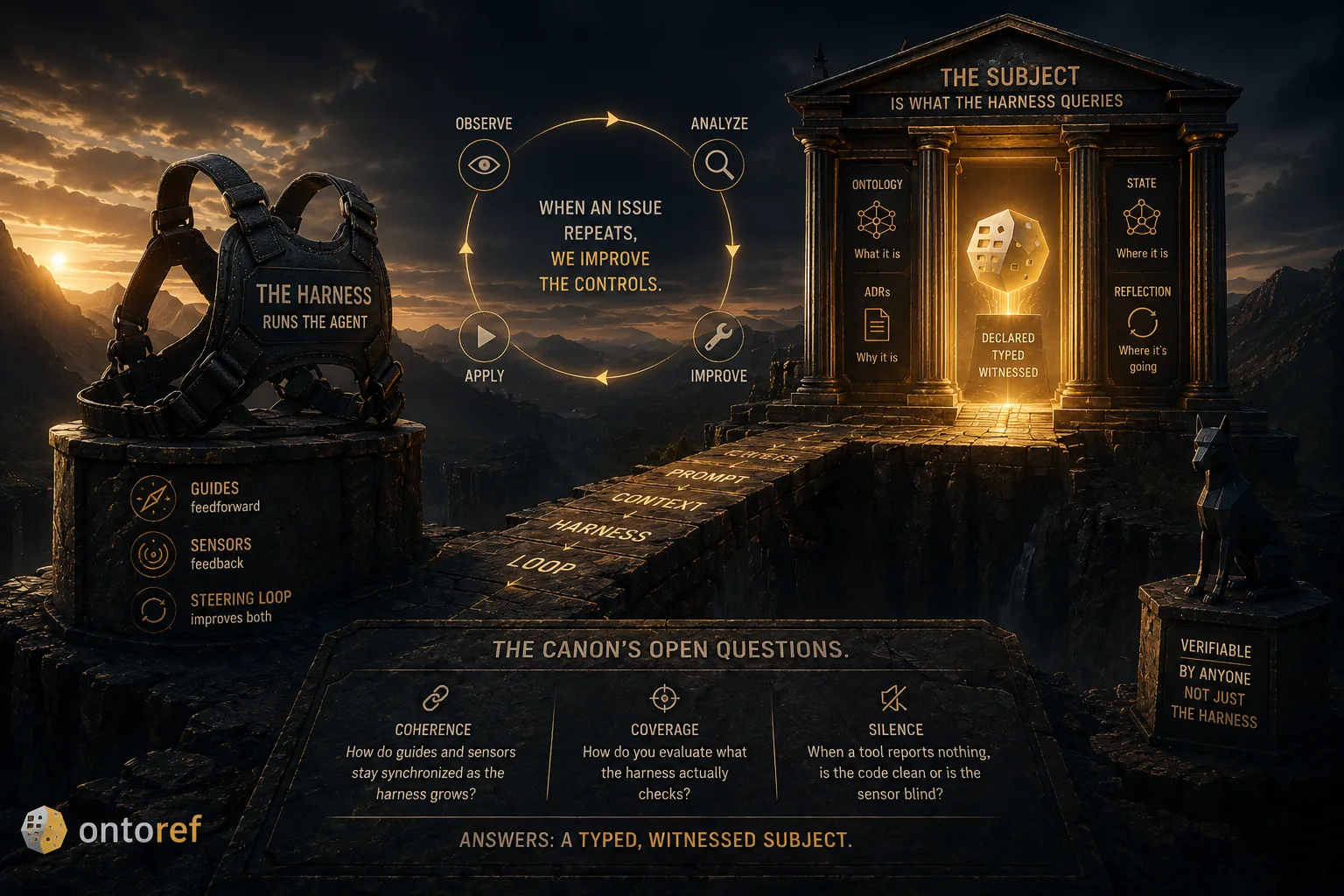
The harness has its canon. Its open questions have answers.
The harness discipline now has a canonical text: guides steer the agent before it writes, sensors correct it after, and a steering loop improves both when issues repeat. This post adopts that vocabulary and takes the next step: the canon's own open questions — how do guides and sensors stay coherent as the harness grows, how do you evaluate harness coverage, what does a silent tool mean — are exactly the questions a typed, witnessed subject answers. A check that does not declare what it looked at is a harness lying by omission; a sensor whose verdict is signed is one you can audit. The harness runs the agent. The subject is what the harness queries.
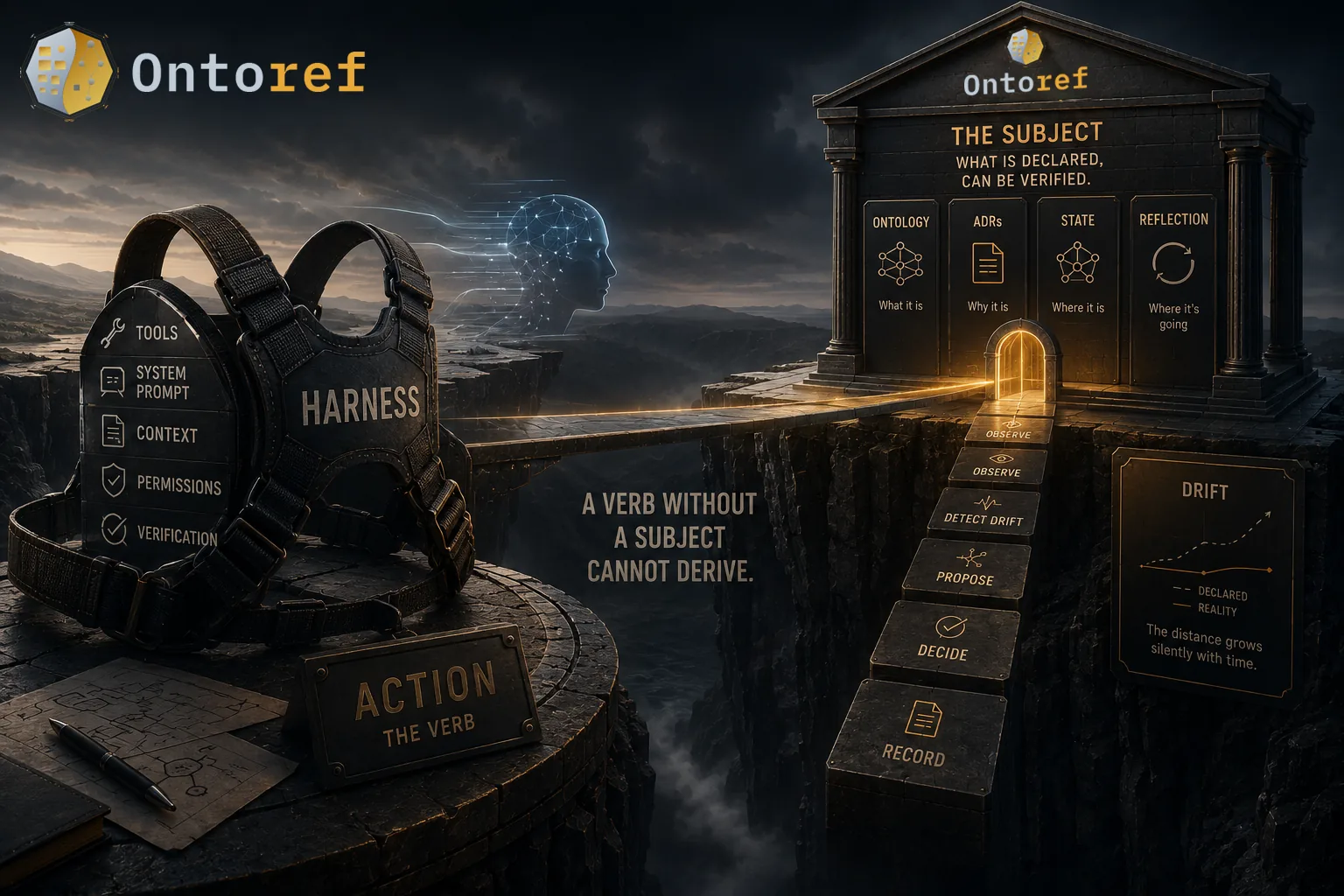
A harness without a subject: what harness engineering doesn't name yet
Harness engineering just named itself as a discipline: documentation as code, architectural constraints, layered verification, periodic consistency audits. All four pillars exist — in flat markdown, held up by manual discipline. This post concedes the whole argument (“the model is commodity, the harness is the advantage”) and adds the next step: the harness governs the verb — how a change is made — and names no subject to check it against. A verb without a subject cannot drift, because drift is precisely a subject diverging from its own declared self.
3 items