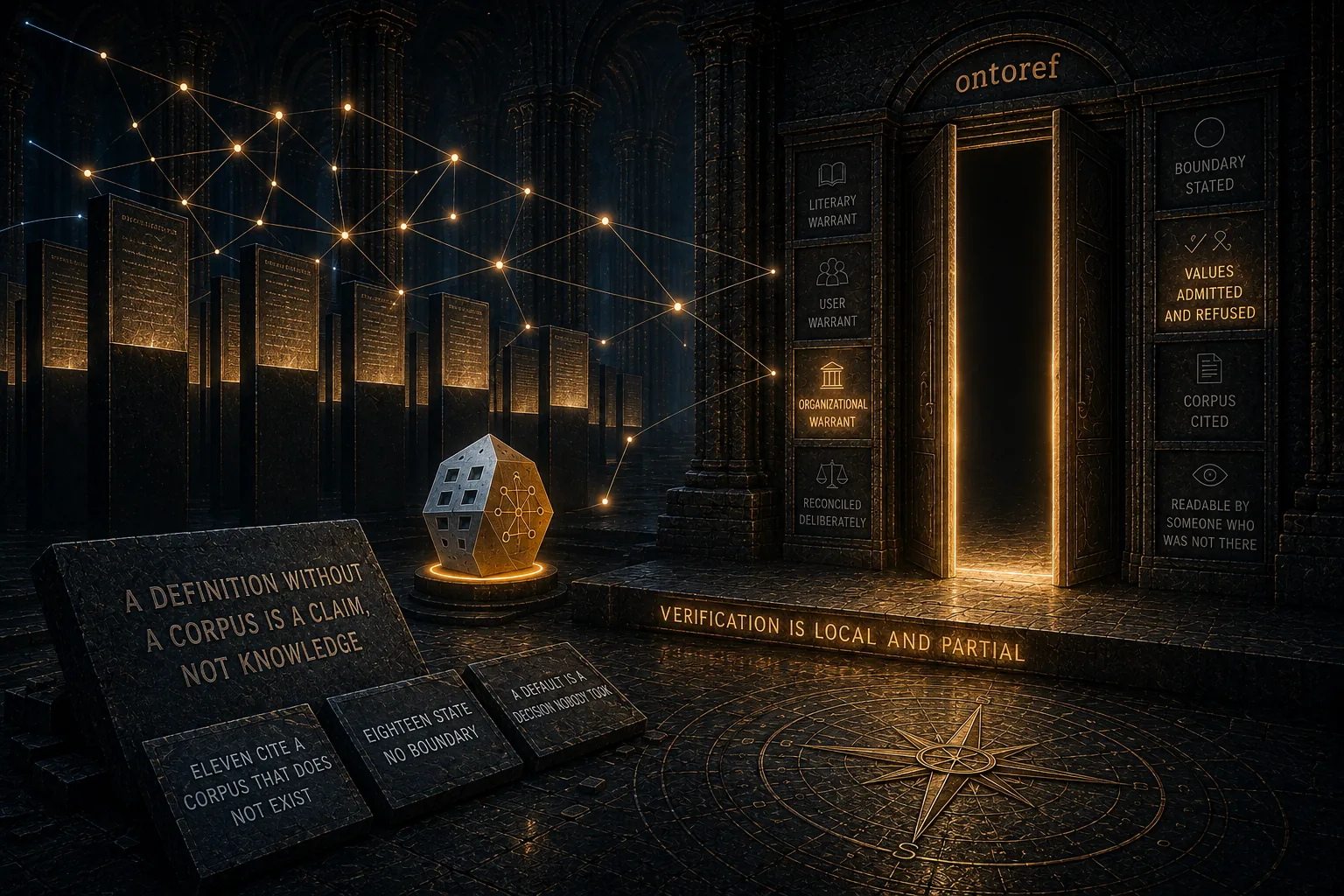
The gap was there before the agent
When an agent invents what a column means, the reflex is to blame the model. Jessica Talisman's argument is sharper: the underspecification was always there, and human inquiry at read time was concealing it — the analyst asked the engineer, got the answer, wrote nothing down, and the cost recurred without ever being attributed to the definition. A machine consumer has no such recourse, so it completes the definition from statistical exposure to thousands of other organizations' schemas. We took ISO 11179-4 and the Z39.19 warrant triad and pointed them at ontoref's own glossary. Of its thirty-odd terms, 11 declare external warrant with no corpus reference and 18 state no boundary at all. The finding is not that we lack the fields — we have them. It is that a default was making a claim nobody had made.
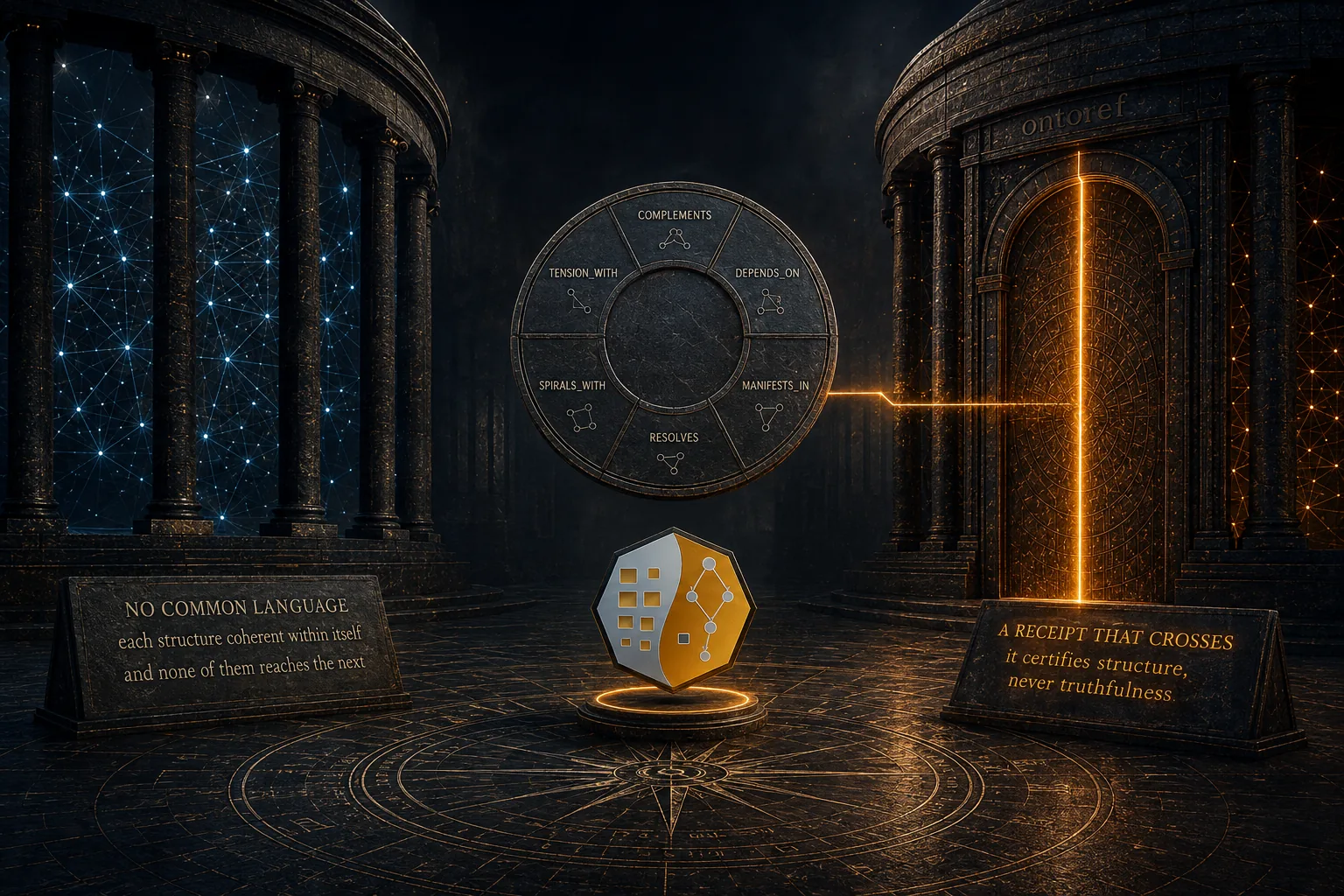
Babel does not need a translator. It needs a witness.
Nicolas Figay argues that AI generates representations, not shared conceptualizations — and that as semantic artifacts get cheap, the bottleneck moves from building ontologies to agreeing about them. Every step of that holds here. What it leaves open is how plurality is supposed to work in practice, and that is a mechanism question: how does one subject verify another's claim without adopting its model? The answer is not a common vocabulary. It is a signed slice. And the same essay caught us doing the thing it warns about, in our own provisioning surface.
2 items